
7 Steps to Decode a Car Key Code
Last Updated: November 11, 2026
Quick Summary
To decode a car key code, first locate the code card or key tag that came with the vehicle, then take it to a dealer or automotive locksmith who matches the bitting numbers to your key profile and verifies them against the lock before cutting. If no code card exists, a locksmith can decode the bitting directly from the key or lock cylinder.
A car key code is the unique string of numbers and letters that tells a locksmith how to cut a key for one specific vehicle.
Mechanical key codes describe the cuts on the blade, while electronic codes are programmed into the transponder chip.
Expect to show your VIN, photo ID and V5C logbook before a dealer or locksmith releases a code.
A locksmith can remove a lock cylinder and read the wafers or pins directly when no code is available.
Cutting and programming are separate jobs, and most modern vehicles need both to start.
Lost your car key code?
We decode, cut and program car keys on site across the South West.
Table of Contents
What a Car Key Code Is and Why It Matters
A locksmith working from the correct code can cut a replacement key to fit the lock accurately.
Every vehicle model uses its own coding system. The code describes the key bitting: the depth of each cut along the blade.
Knowing what a car key code is helps you understand what a locksmith needs from you, and why they ask for proof of ownership.
Mechanical Key Codes vs Electronic Programming Codes
Two very different things share the name "key code". Mixing them up is the most common confusion we see.
Mechanical key code: a number that describes the physical cuts on the key blade. It opens door locks and the ignition lock.
Electronic code: the signal a transponder key or key fob sends to the immobiliser. It is programmed, not cut.
A mechanical code gets you a key that fits. An electronic code gets that key to start the engine. Most modern vehicles need both, which is why key cutting and key programming are separate jobs.
How to Find a Car Key Code
The fastest place to find your car key code is the code card or tag that came with the vehicle when new. Many owners never realise they have one.
Here is where to look, in order:
The code card or key tag in the vehicle wallet or service folder
The owner's manual or a sticker inside the glovebox
A metal tag attached to the spare key, if one came with the car
The vehicle identification number (VIN), which a dealer or automotive locksmith can use for a code lookup
A key-code database held by the manufacturer, accessed through a dealer

Proof of ownership: why you will be asked
No legitimate dealer or locksmith will hand over a key code on request alone. A car key code is security-sensitive information, and the industry treats it like a password. Expect to provide:
The vehicle's VIN and registration number
Photo ID in the name of the registered keeper
The V5C logbook or a recent insurance document showing you as the keeper
Dealers typically check the V5C against the VIN and the name on your ID before releasing a code. If someone offers to sell you a code from a VIN alone, walk away: a VIN is visible through the windscreen, so anyone can read it. That is exactly how cloned keys get made.
Choose the right route for your vehicle
Use this decision tree to pick the method that fits your situation:
You have the code card or tag: take it to a dealer or automotive locksmith. This is the quickest and cheapest route.
You have a working key but no code: a locksmith can decode the bitting from the key or lock cylinder.
You have no working key and the vehicle is pre-immobiliser (roughly pre-1998): a locksmith can remove a lock cylinder and read the wafers or pins directly. No electronic programming is needed.
What to do when the code is unavailable
If no code card exists and the dealer cannot or will not release the code, you still have options:
Lock decoding: a locksmith removes a door or ignition lock and reads the bitting directly from the wafers or pins. This is the classic fallback and works on most mechanical locks.
Code retrieval through a trade account: many locksmiths hold accounts with code suppliers that dealers use, which can shorten the wait.
Full lock replacement: on very old or damaged vehicles, replacing the lock set can be cheaper than chasing a code.
Watch out: a code that was correct at the factory may not match the lock in the door today if the lock has been replaced or a second-hand lock fitted. Always verify before cutting.
If you cannot find any of these, do not panic. A good locksmith can often read the code directly from a lock, and our guide on whether emergency car key cutting is reliable explains what a proper job involves.
Reading and Verifying the Code Before You Cut
Reading the code is only half the job. Verifying it is what stops you wasting a key blank.
A code lookup gives you a bitting code: a series of numbers, each one a cut depth for a position along the blade.
Verification means checking the code against the actual lock. We do this by:
Testing the cut depths against a known working key, if you have one
Removing the lock cylinder and reading the wafers or pins directly
Confirming the vehicle year, make and model match the code record
This step matters most on older cars.
If you are weighing up whether professional cutting is worth it, our guide on whether emergency car key cutting is reliable explains what a proper job involves.
Car Key Cutting by Code: What the Numbers Mean
Each number in a bitting code is a cut depth.
Think of it like a recipe. The code is the list of ingredients, the key profile is the tin, and the machine does the mixing.
A few things affect how straightforward the cut is:
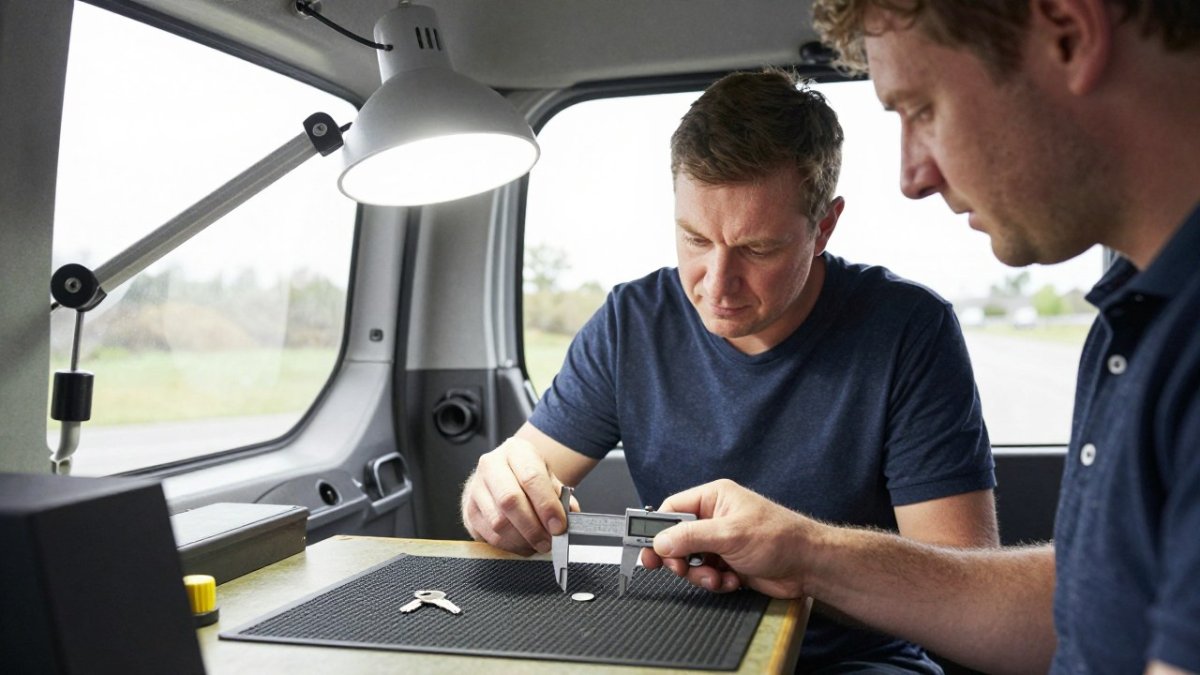
Key profile: the shape of the blade, which varies by vehicle make
Cut depth tolerance: how precise each cut must be, usually a fraction of a millimetre
Key blank availability: some profiles need a specific blank
Cutting from a correct code avoids copying the wear on an old key, which can otherwise cause the copy not to work.
Most cut-and-program jobs are done on site in a single visit. Our article on how long it takes to cut and program a spare car key walks through the timings.
Decode a Car Key from a Photo: What Works and What Doesn't
You can sometimes decode a car key from a photo, but only in narrow circumstances. It is not the shortcut some online services claim.
Here is what a photo can and cannot tell you:
What you want to know | Photo decoding? | Why |
Key profile shape | Sometimes | Blade silhouette is visible if the photo is sharp and flat |
Bitting code from a worn key | Rarely | Wear rounds off the cut edges and hides true depths |
Bitting code from a new key | Sometimes | Clean edges help, but scale and angle must be exact |
Transponder or electronic code | No | The chip holds no readable code in a photo |
Immobiliser programming data | No | Requires a diagnostic tool connected to the vehicle |
A photo of a worn key is the worst case. Years of use blur the cut depths, and a locksmith reading it by eye can easily be one depth out.
If a key is failing rather than lost, the chip may be the problem, not the cut. Our guide on signs your car transponder chip is failing covers the symptoms to look for.
Car Key Programming: The Electronic Side of the Code
Programming is where the electronic code comes in. A transponder key carries a chip, and the immobiliser only accepts a chip it recognises. A mechanical key code gets you a key that fits the lock, but it does nothing for the chip. Cutting and programming are separate jobs, done with separate tools, and most modern vehicles need both.
What the chip actually does
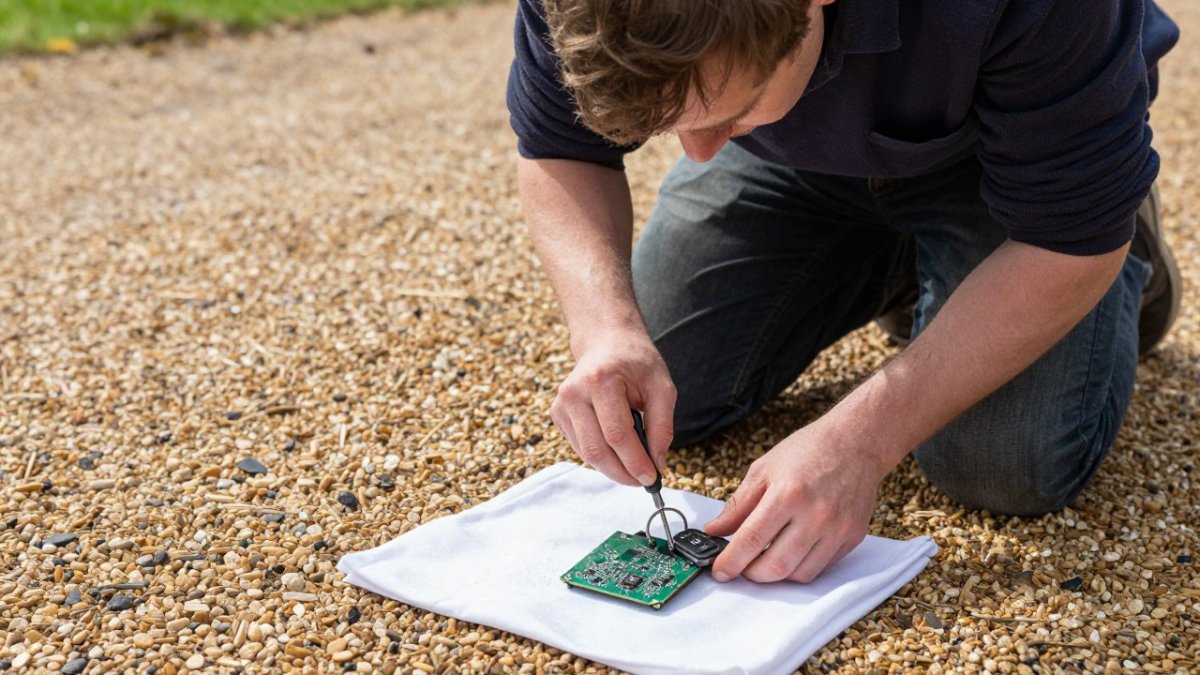
The transponder chip is a small glass or plastic capsule inside the key head, usually with no battery. When you put the key in the ignition, an aerial around the lock barrel sends a low-energy radio signal that powers the chip just enough for it to reply with its unique identifier.
That is why a key that turns in the door but will not start the car is usually a programming problem, not a cutting one. The blade is fine. The chip is not recognised.
How programming is done
Programming means writing the vehicle's security data to the new chip, or teaching the immobiliser to accept it. The method depends on the vehicle:
On-board programming: some vehicles let you add a key using a sequence of ignition and door operations, often with an existing working key present. This is increasingly rare on newer models.
Diagnostic programming: a locksmith or dealer connects a diagnostic tool to the OBD port and follows the manufacturer's security access procedure. This is the standard route for most vehicles built since the mid-2000s.
Bench or boot programming: some modules must be removed and programmed on the bench, which takes longer and costs more.
A common pattern is for vehicles to require at least one existing working key to add a spare. If all keys are lost, the job becomes an "all keys lost" programming, which often needs a security code from the manufacturer and takes longer.
Mechanical code versus electronic code: a quick comparison
What you need | Mechanical key code | Electronic programming |
Purpose | Cuts the blade to fit the lock | Teaches the immobiliser to accept the chip |
Tool | Key cutting machine | Diagnostic tool or on-board sequence |
Typical vehicle age | All ages | Most vehicles since the late 1990s |
Can a photo provide it? | Sometimes, if the key is unworn | No |
What happens if missed | Key will not turn | Engine will not start |
What to do when programming fails
If a newly cut key will not start the car, the fault is usually one of three things: the chip is not the right type for the vehicle, the programming procedure was not completed, or the immobiliser has a stored fault. A locksmith with the right diagnostic equipment can read the immobiliser codes and tell you which. On older vehicles, a failing transponder chip can also cause intermittent starting, which our guide on signs your car transponder chip is failing covers in detail.
Watch out: some online sellers supply "pre-programmed" keys that are not matched to your vehicle. A chip programmed to another car cannot usually be reprogrammed to yours, so you end up paying twice.
We handle both sides of the job on site, at your home, workplace or roadside. Our page on car key programming services in the region sets out what is involved.
Ask Salisbury Auto Keys to Decode and Replace Your Key
Decoding a car key code is not a job to guess at.
We are a family-run, RAC-accredited auto locksmith covering Wiltshire, Hampshire, Dorset and parts of Somerset.
We come to you, whether you are at home, at work or stuck at the roadside.
Get in touch and we will confirm what we need to decode your key and get you moving again. Contact Salisbury Auto Keys for Reliable Auto Locksmith Services to book decoding and replacement.
Stuck with a key that will not turn or a fob that will not start the car?
Frequently Asked Questions
What is a car key code?
A car key code is a short sequence of letters or numbers that identifies the exact cuts needed for a mechanical key blank. It is sometimes called a key number or bitting code. The code tells a locksmith or dealer the cut depth and key profile so a replacement key can be cut without copying a worn original. It is not the same as the electronic programming code used for transponder keys and immobilisers.
Can a locksmith decode a car key?
Yes. A qualified automotive locksmith can read the code from the lock cylinder, a code card, or the vehicle's records, then cut a key to that code. They can also verify the code against the door or ignition lock before cutting. For electronic keys, the locksmith programs the transponder to the immobiliser. Ask for proof of ownership before any work starts. Salisbury Auto Keys is RAC-accredited and fully insured.
Can a car key be decoded from a photo?
A photo can help identify the key profile and blade shape, but it is not reliable for decoding the bitting. Wear, lighting, and camera angle hide the true cut depths. A photo is useful for confirming the key blank before you order one. For an accurate cut, use the key code or read the lock cylinder directly. Never rely on photo decoding alone for a replacement key.
What should I do if I have lost my car key and its code?
Call a mobile auto locksmith with proof of ownership ready, such as the V5C logbook and photo ID. The locksmith can remove a door lock or read the code from the vehicle to cut a new key. If the car has an immobiliser, they will also program the transponder. Ask about call-out times and the guarantee before booking. Salisbury Auto Keys covers Wiltshire, Hampshire, Dorset, and parts of Somerset.
Comments