
BMW Key Not Detected? What to Do Before You Call for Help
Last Updated: November 1, 2026
Quick Summary
A BMW key not detected warning usually comes down to a weak key-fob battery, signal interference, or a vehicle receiver fault. Check and replace the coin-cell battery first, then hold the fob against the marked recognition point to start the car. If neither key works, test the car battery before booking a repair.
A fading coin-cell battery can still power the buttons while the car fails to detect the key.
Newer fobs may have a bitter child-resistant coating on the coin cell that blocks a clean contact.
Hold the fob flat against the steering-column recognition point and keep it still for a few seconds.
If the car starts via the backup coil, you have confirmed a key-battery fault.
If both keys fail at the recognition point, the fault is in the vehicle, not the fob.
Table of Contents
Why Your BMW Says Key Not Detected
A "BMW key not detected" warning almost always comes down to one of three things: a weak key-fob battery, signal interference, or a fault in the car's receiver. This message is common, and the fix is usually simpler than drivers fear.
The car is not broken. It simply cannot hear the key.
BMW's own guidance for vehicles with Operating System 7 says that if the key is not recognised, you should slightly change the key's position and repeat the procedure, then contact service if the problem continues (BMW owner FAQ on unrecognised keys(EXTERNAL_LINK: BMW owner FAQ on unrecognised keys | bmw.com)). That short answer hides a useful diagnostic path, which is what this guide gives you.
The Three Fault Groups: Key, Vehicle, or Interference
Every "BMW key not detected" fault sits in one of three groups. Finding the group first saves you money and time.
Key fault: flat coin-cell battery, bent contacts, or a damaged fob
Vehicle fault: weak car battery, faulty antenna module, or receiver problem
Interference: a phone, charger, or nearby transmitter blocking the radio-frequency signal
Work through them in that order. The key is the cheapest and most common culprit, so rule it out first.
Step 1: Check the Key-Fob Battery and Contacts
Start with the battery. A coin-cell battery that is fading still powers the buttons, so the doors may unlock while the car refuses to detect the key. That catches a lot of drivers out.
Open the fob and look at three things:
The battery type, usually a CR2032 or CR2450 coin cell. Match it exactly.
The polarity. The flat positive face usually sits upward, but check the moulding marks inside the shell.
The contacts. Look for green corrosion, bent tabs, or a battery sitting loose.
Battery Type, Polarity, and the Child-Resistant Coating
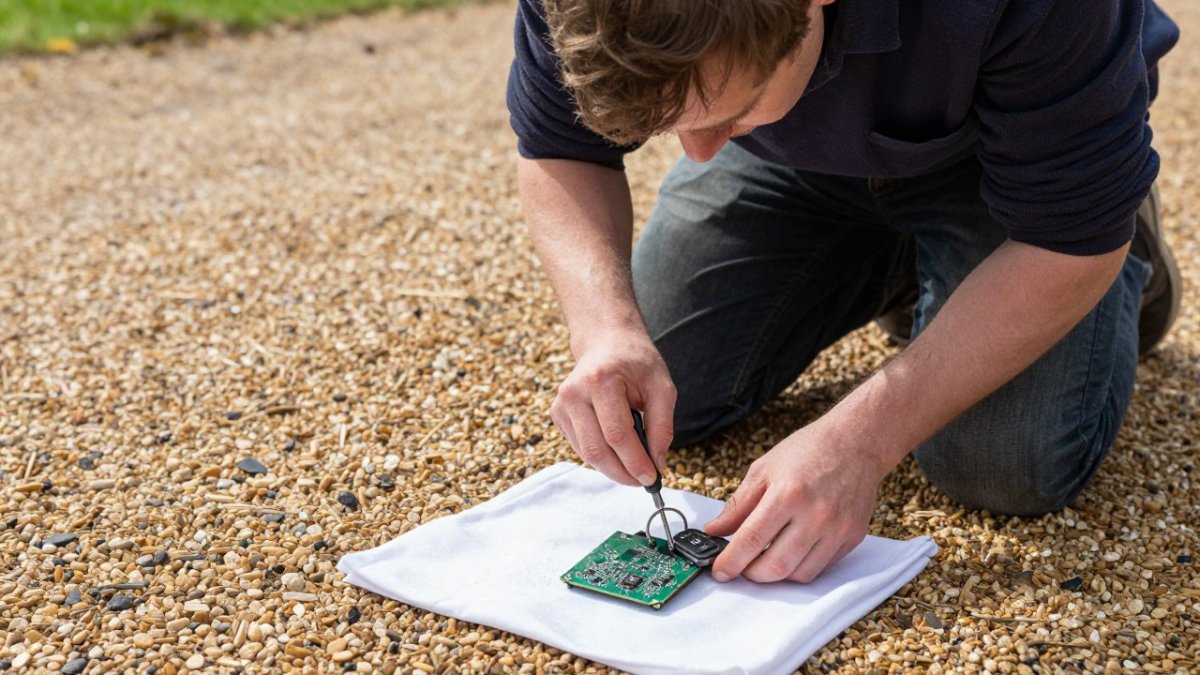
Newer fobs often ship with a bitter child-resistant coating on the coin cell. That coating can block a clean contact. Wipe the faces with a dry cloth before you fit it.
Watch out: forcing the shell closed can bend the contact tabs, and a bent tab reads as a dead key even with a fresh battery.
Fit the battery the right way up, press the shell together until it clicks, then test. If nothing changes, move to Step 2.
Step 2: How to Start a BMW with a Dead Key
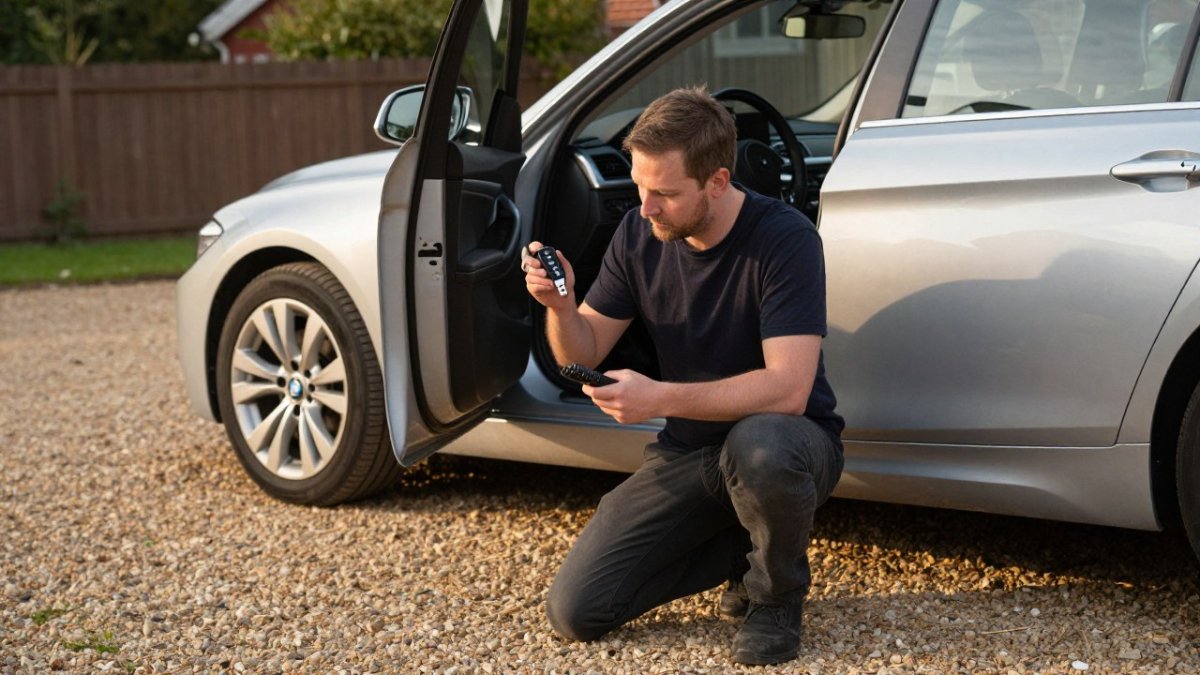
You can start a BMW with a dead key by holding the fob against the marked key recognition point and pressing the start button. The car reads the key through a low-power coil, so no battery power is needed. The recognition point and the exact sequence vary by model and generation, so use the guidance below for your car rather than a generic instruction.
The Recognition Point by Model and Generation
Most modern BMWs (F and G series, including 1 Series, 3 Series, 5 Series, X1, X3 and X5): hold the fob flat against the steering column on the side facing the driver, over the marked key symbol. Press the brake and the start button together and keep the fob still for a few seconds.
Comfort Access models: the same steering-column position usually works. Press the fob flat rather than at an angle, because the coil reads through the flat face.
Some models with a centre-console slot: the backup start slot sits in the centre console or under a rubber mat in the cupholder area. Drop the fob into the slot rather than holding it above it.
Older models with a key slot: insert the fob into the dash slot and press the start button as normal.

The Exact Sequence
Sit in the driver's seat with the doors closed.
Press the brake pedal and hold it.
Hold the fob flat against the recognition point.
Press the start button and keep the fob still for a few seconds.
If the engine catches, release the brake and drive. If it does not, reposition the fob slightly and repeat once.
Pro Tip If the car starts this way, you have confirmed a key-battery fault. Fit a fresh coin cell before you drive far, because the backup coil only works while the fob is held in place.
If the Backup Start Does Not Work
A failed backup start points away from the key battery and towards the vehicle side: a weak car battery, a faulty antenna module, or a receiver problem. Test the car battery before you book a key repair, and try the spare key as described in Step 3. If neither key works at the recognition point, the fault is in the vehicle, not the fob.
BMW Key Not Recognised After Battery Change: What Went Wrong
A BMW key not recognised after a battery change usually means the battery is upside down, the contacts are dirty, or the fob lost its pairing. Start by refitting the coin cell and cleaning the contact points.
A Little Bit Of Everything
Then check these:
Is the battery the correct type and genuinely new? Old stock sits on shelves for years.
Did the shell click shut fully? A gap breaks the circuit.
Does the red light blink when you press a button? No blink points to a contact fault.
If the fob works but the car still will not detect it, the key may need re-synchronising or programming. That is a job for a diagnostic tool.
Step 3: Rule Out Signal Interference and Try the Spare Key
Signal interference is the most overlooked cause. Phones, dash cams, charging cables, and even shop door sensors can swamp the radio-frequency signal.
Try this:
Move the fob away from your phone and any charger
Step outside the car and try again
Move the car a few metres from where it is parked
Hold the fob higher, away from metal trim
Next, test the spare key. If you do not have one, our guide on why you need a spare car key explains why it matters and how to get one. If the spare works, the fault is in your main fob. If neither key works, the problem sits with the vehicle, not the keys.
BMW Key Fob Not Working Intermittently: Tracking Down an Intermittent Fault
An intermittent fault is the hardest to pin down. A fob that works one minute and fails the next usually points to a failing battery, a loose contact, or a damaged antenna. Our guide to why your car key fob fails lists seven common causes behind an intermittent fault.
Use this simple diagnostic flow:
Symptom | Likely cause | Next step |
Fails in one spot only | Signal interference | Move the car, retest |
Fails more as weather cools | Weak coin-cell battery | Replace the battery |
Buttons work, car will not start | Key recognition fault | Use the backup start point |
Both keys fail | Vehicle battery or receiver | Test the car battery |
Fob dropped or wet | Damaged key | Book a key repair |
A common mistake is replacing the fob when the real fault is a weak vehicle battery. Test the car battery before you spend money on keys.
When You Need a BMW Key Replacement Service
Call a BMW key replacement service when the fob is damaged, both keys fail, or the car will not detect a key even with a fresh battery. A mobile service can often provide a replacement at your location, which may save a trip to a dealer.
What Drives the Cost
Pricing depends on your model, the key type, and the work needed, so contact Salisbury Auto Keys on our website for a current quote. The main factors are:
Key type: the type of key you need affects the job.
Model and generation: the vehicle model can affect how the job is carried out.
Whether you have a working key: the situation you are in affects the job.
Programming and Warranty
A locksmith can program many BMW keys, but not every model and generation. Our guide on whether locksmiths can program BMW keys explains which jobs need a dealer. Every job we carry out comes with a 12-month guarantee, and we are RAC accredited and fully insured.
Key Takeaway Before you commit to a replacement, rule out the cheap fixes: a fresh correctly fitted coin cell, clean contacts, and a backup start at the recognition point. If those fail and both keys are dead, the fault is likely in the vehicle and a diagnostic check comes before any new key.
Stranded? Ask Us Now for Mobile Help
If you are stuck at the roadside, do not force anything. A locked car and a dead key are fixable; a broken ignition barrel is not cheap.
We are a family-run team covering Wiltshire, Hampshire, Dorset, and parts of Somerset. We come to you, at home, at work, or at the roadside, and we aim to help with your key problem on the spot. You can contact Salisbury Auto Keys for help and a straight answer on timing and cost.
Frequently Asked Questions
What happens if your BMW key battery dies?
The key fob stops transmitting its radio-frequency signal, so the car shows key not detected and the start button may not respond. You can still drive: hold the fob against the backup start location, usually on the steering column, and press the start button. Replace the coin-cell battery as soon as possible. If a fresh battery does not fix it, the fault may be in the key or the vehicle's receiver, and a diagnostic check is the next step.
How can I tell whether the problem is the BMW key or the car?
Try the spare key. If the spare works normally, the fault is in the first fob: battery, contacts, or damage. If neither key is detected, suspect the vehicle side, such as the antenna module or receiver, or strong signal interference nearby. Moving the car away from the interference and retesting is a quick way to separate the two. A locksmith can test the key's signal output directly.
Why is my BMW key fob not recognised after changing the battery?
The most common causes are a battery fitted the wrong way round, a battery that is the wrong type or slightly too thick, or bent contacts inside the fob. The child-resistant coating on some coin cells can also block contact, so wipe it before fitting. Check polarity against the old battery, reseat the cell firmly, and test again. If it still fails, the fob may need reprogramming or repair.
Can a mobile auto locksmith program a newer BMW key, or do I need the dealership?
A mobile service may be able to help without a recovery truck or dealership visit, and you can keep the car at home or at the roadside. Ask about accreditation, insurance, and the guarantee on the work before booking, and confirm the key type for your model when you call.
A dead key should not cost you a day. Call Salisbury Auto Keys and we will confirm whether it is a battery, a fob, or a programming job, then come to you with the right kit. Our fully mobile service, RAC accreditation, and 12-month guarantee mean you get back on the road with one less thing to worry about. Get started with Salisbury Auto Keys and ask us now for help.
Comments