
Common Reasons Car Key Fobs Stop Working
Table of Contents
Common Reasons Car Key Fobs Stop Working
How a Key Fob Communicates With Your Car
Car Key Fob Battery Replacement: When and How to Do It
Battery Polarity and Contact Mistakes to Avoid
Key Fob Not Working After Battery Change: What Went Wrong
Car Not Detecting Key Fob: Signal, Range, and Interference Issues
A Three-Step Test to Separate Interference From a Failing Fob
Range, Walls, and Metal
When the Car Itself Is the Problem
Car Key Fob Reprogramming: When You Need It and What It Involves
Resynchronisation: The Job You Might Do Yourself
Full Reprogramming: When Specialist Equipment Is Required
What to Expect From a Mobile Service
Physical Damage, Wear, and Water Ingress
Frequently Asked Questions
Last Updated: October 12, 2026
Common Reasons Car Key Fobs Stop Working
A flat battery causes most key fob faults, but it is not the only culprit.
A key fob is a small radio transmitter that sends a coded signal to a receiver inside your car. Press the button, and the car checks the code before unlocking or allowing ignition.
When that signal fails, drivers often assume the worst. In practice, the cause usually falls into one of seven groups:
A dead or weak fob battery
Buttons that are dirty, worn, or damaged
Water ingress or a cracked casing
Signal interference from nearby electronics
The fob sitting out of range
Internal contact or circuit board damage
The fob losing its programming
Below, we walk through each cause and how to narrow down which one is affecting your car.
How a Key Fob Communicates With Your Car
Your fob and car talk over a short-range radio signal. Press a button and the fob transmits a unique code.
Most modern systems also use a passive transponder. That chip needs no battery power to be read by the ignition receiver.
Two things follow from this. A fob that unlocks but will not start points to a transponder or immobiliser fault, not a battery.
Range matters too. Most fobs work within a few metres, and the signal weakens through walls, metal, and bad weather.
Pro Tip Hold the fob under your chin and press the button. Your head acts as an antenna and can add a few metres of range. It sounds odd, but it works when you are stuck in a car park.
Car Key Fob Battery Replacement: When and How to Do It
Most fob batteries last between two and four years, depending on use. Replace yours at the first sign of weakness: reduced range, delayed response, or a dashboard warning.
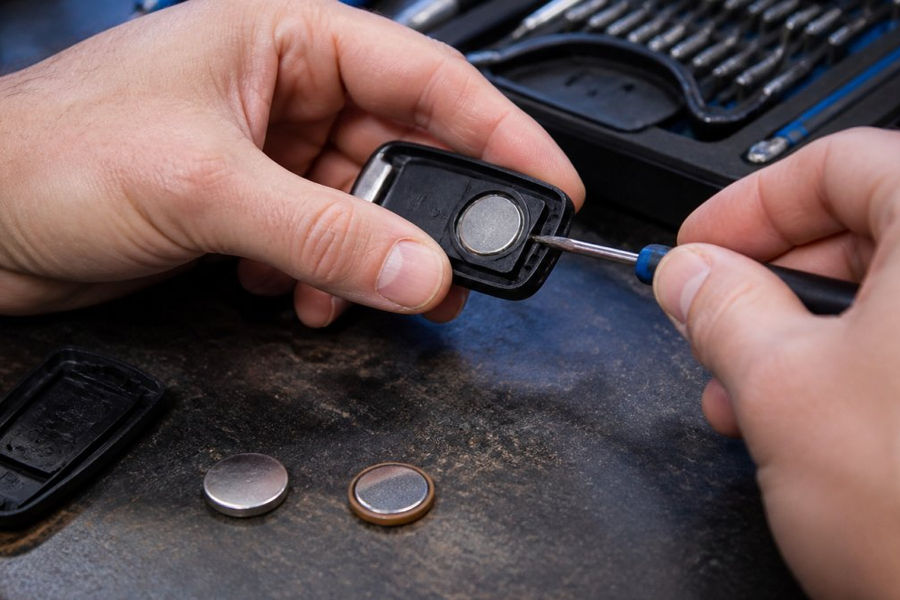
You will need a CR2032 coin-cell battery for most cars, though some models use CR2025 or CR1632. Check your handbook before buying.
Here is the process:
Press the button to release the physical key blade, if your fob has one.
Insert a small flathead screwdriver into the seam and twist gently.
Lift the cover away without forcing it.
Note which way the old battery sits before removing it.
Fit the new battery the same way up.
Snap the casing back together and test all buttons.
The whole job takes about two minutes. If the fob still fails after this, the battery was not the problem.
Battery Polarity and Contact Mistakes to Avoid
The most common mistake is fitting the battery upside down. The flat side with the plus symbol must face the correct way, usually upward. Get it wrong and the fob simply will not work.
Watch for these errors:
Touching both faces of the new battery with bare fingers, which leaves grease on the contacts
Bending the metal contact tabs while lifting the old battery out
Trapping the rubber seal when closing the case, which lets water in
Using a battery of the wrong thickness, which stops the case closing properly
If you are unsure, a mobile auto locksmith can replace the battery and test the fob on the spot.
Key Fob Not Working After Battery Change: What Went Wrong
A fob that fails straight after a battery change usually has one of four problems.
Auto Squad
Start by checking polarity. Remove the battery and refit it with the correct face up. Next, look at the metal contacts.
Then check the battery itself. A new battery can still be flat if it has sat on a shelf for years. Test it with a multimeter if you have one.
Finally, consider programming. Some fobs lose their code when the battery is removed for more than a few minutes.
Watch Out Never force a fob case closed. If it will not snap shut, the battery is the wrong size or the seal is misaligned. Forcing it cracks the plastic and can damage the circuit board inside.
Car Not Detecting Key Fob: Signal, Range, and Interference Issues
When the car will not detect your key fob, the fault may sit with the car, the fob, or the radio environment around it. Separating those three is the whole job, and most drivers skip straight to replacing the fob before they have done it.
Radio interference is the most overlooked cause. Strong signals from phone masts, Wi-Fi routers, shop security gates, and even other cars can swamp your fob's transmission.
A Three-Step Test to Separate Interference From a Failing Fob
Work through these in order. Each step rules out one of the three suspects.
Move the car. Walk back ten metres, then try again from a different angle. If the fob works once you have moved, the problem is local interference, not the fob.
Test the spare fob in the same spot. If the spare also fails in that location but works elsewhere, the environment is blocking the signal. If the spare works and your everyday fob does not, the fault is in your fob.
Try the fob in a different location entirely. Take it to another street or a car park a few minutes away. A fob that works everywhere except one spot has an interference problem. A fob that fails everywhere has a fob or vehicle problem.
If all three tests point to interference, there is nothing wrong with your fob and nothing to repair. Move the car and carry on.
Range, Walls, and Metal
Range issues are simpler but often mistaken for faults. A fob works within a few metres, and the signal drops sharply through walls, metal, and even a full shopping bag held against the fob. If you are pressing from inside the house, step outside.
A common pattern is a fob that works from the driveway but not from the kitchen. That is not a fault. It is distance and building fabric doing exactly what physics says they should.
When the Car Itself Is the Problem
If the fob works in every location and the spare behaves identically, the fault is likely in the car's receiver or its antenna.
A quick check: hold the fob right against the receiver location, usually near the steering column or start button, and press. If the car responds only at point-blank range, the receiver or its antenna is the likely culprit. That needs a diagnostic check rather than a new fob.
Key Takeaway Before you buy anything, run the three-step test. Interference and range problems cost nothing to fix, and they account for a large share of 'dead fob' call-outs that turn out to be nothing of the sort.
Car Key Fob Reprogramming: When You Need It and What It Involves
A fob needs reprogramming when it loses its code, when you buy a new or second-hand fob, or when the car's immobiliser memory is wiped. Reprogramming links the fob to your specific vehicle so the car recognises it.
There are two very different jobs hiding under that one word, and knowing which you are facing saves both time and money.
Resynchronisation: The Job You Might Do Yourself
Resynchronisation re-pairs a fob that has simply fallen out of sync with the car, usually after a battery change or a long period without use. The fob still holds its code; the car has just stopped listening to it.
Many vehicles allow a simple resynchronisation sequence using nothing but the fob and the car. The exact sequence varies by make and model, but common patterns include:
Pressing a button on the fob a set number of times within a short window while sitting in the driver's seat
Turning the ignition on and off in a defined pattern, then pressing a fob button
Holding two fob buttons together for several seconds until the car responds
Your owner's handbook is the only reliable source for your model's sequence. If the handbook does not list one, the car does not support DIY resynchronisation, and you can stop trying.
Full Reprogramming: When Specialist Equipment Is Required
Full reprogramming writes a new code into the fob and the car's immobiliser memory. This is not a job you can do at home with a video guide. Each manufacturer uses its own system, and the equipment needed varies by make and model. Some cars need a diagnostic tool plugged into the car's port; others need manufacturer-level software that is licensed, not sold.
There are limits worth knowing before you buy anything:
A second-hand fob from another car often cannot be reprogrammed to yours, because the code is tied to the original vehicle
Some manufacturers restrict who can access the programming software, which is why main dealers sometimes have to be involved
A fob that has lost its code cannot be fixed by a battery change alone, no matter how fresh the battery
Some vehicles store a limited number of key slots, and adding a new fob may require an existing one to be erased first
What to Expect From a Mobile Service
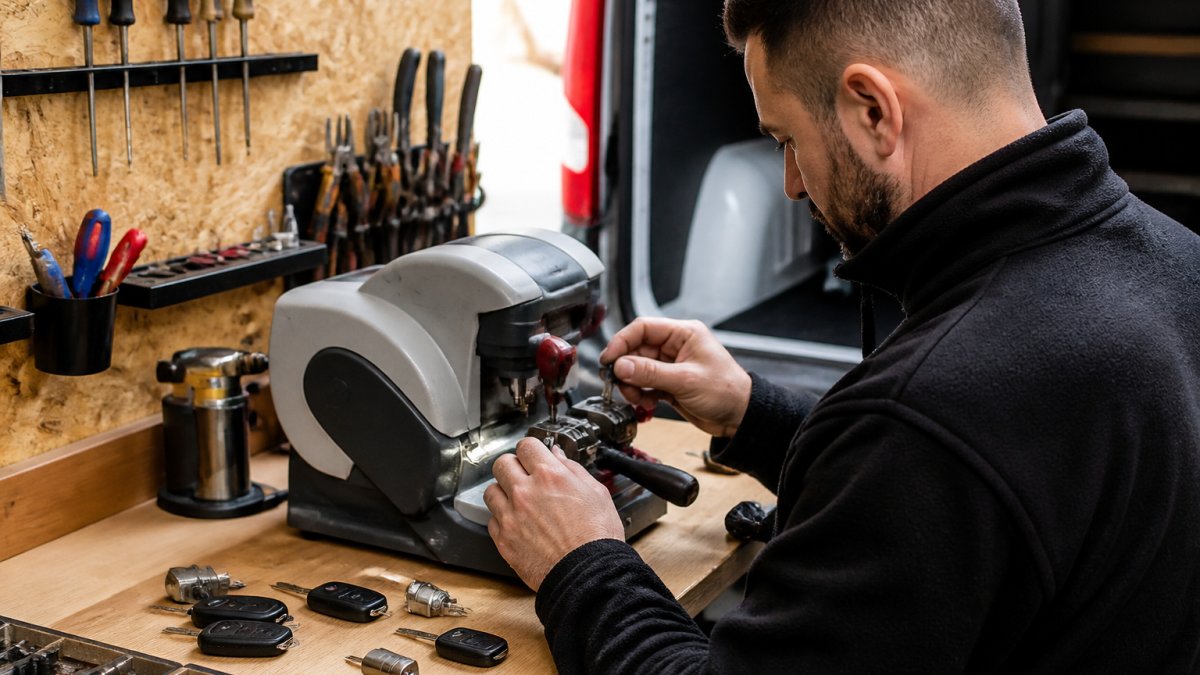
A mobile auto locksmith carries the diagnostic tools needed for many makes and can program most fobs at your home, workplace, or roadside. The advantage is not just convenience. It avoids a recovery truck and a dealership appointment, both of which add cost and delay.
Before booking, have your vehicle's make, model, and year to hand, along with the registration. That lets the locksmith confirm whether your fob can be programmed on site or whether it needs a dealer visit.
Watch Out Never buy a cheap second-hand fob online on the assumption it can be programmed to your car. In many cases it cannot, and the money is gone. Confirm compatibility with a qualified locksmith before you pay.
Physical Damage, Wear, and Water Ingress
Physical damage is the cause drivers spot last, because it hides inside the fob.
Look for these signs:
Buttons that feel spongy or need a hard press
A casing that is cracked or does not sit flush
Sticky residue around the buttons from spilled drinks
Corrosion on the circuit board, often a green or white film
A fob that has been through the washing machine
Water is the worst offender. Even a splash can reach the circuit board and cause intermittent faults that come and go.
Cleaning helps in mild cases.
For a fob that is worn, damaged, or simply beyond repair, we can supply and program a replacement on site.
A failing fob rarely means an expensive dealer bill.
Salisbury Auto Keys offers a fully mobile, RAC-accredited service across Wiltshire, Hampshire, Dorset, and Somerset.
Frequently Asked Questions
Why does my car key not work sometimes?
Intermittent operation usually points to a weak fob battery, worn button contacts, or radio interference. If the problem happens in specific locations, such as near phone masts or large electrical installations, interference is likely. If it happens randomly, the battery or internal contacts are the usual culprits. A systematic check of battery voltage, button response, and signal range will narrow it down. If the fob works close to the car but not from a distance, the battery is the first thing to replace.
Can a car key fob lose its programming?
Yes, though it is less common than battery or damage issues. Programming can be lost after a vehicle battery disconnection, a flat car battery, or certain electrical faults. Some vehicles also de-sync the fob after repeated button presses outside the car's operating range. If your fob has a good battery and clean contacts but the car still will not respond, reprogramming is the next step. This requires diagnostic equipment and, on many models, security access codes, so a qualified auto locksmith is usually the practical route.
Can interference stop a car key fob from working?
Yes. Key fobs use radio signals, and strong nearby signals can block communication. Common sources include phone masts, Wi-Fi routers, shop security gates, and even some LED lighting. If your fob fails in one spot but works everywhere else, interference is the likely cause. Try moving the car a few metres or using the physical key blade to unlock. If the problem follows you to different locations, the fob itself needs attention rather than the environment.
What should I do if my key fob gets wet?
Do not press the buttons. Open the fob, remove the battery, and dry the internal components with a cloth. Leave it to air dry completely for at least 24 hours before refitting the battery. Do not use a hairdryer or heat source, as this can damage the circuit board. If the fob still does not work after drying, the circuit board may be corroded and will need professional repair or replacement. Water damage is one of the more common reasons car key fobs stop working, especially after accidental washing or rain exposure.
ask us now

Comments