
Is a Lost Car Key Covered by Comprehensive Insurance?
Table of Contents
Does Comprehensive Car Insurance Cover Lost Keys?
Where the Answer Hides in Your Policy Schedule
Lost, Stolen or Damaged Keys: Why the Distinction Decides Your Claim
What a Lost Car Key Insurance Claim Actually Pays For
The Three Numbers That Decide Your Payout
Worked Examples: How the Numbers Play Out
Policy Wording and Exclusions to Check First
The No-Claims and Premium Trade-off
Lost Car Key With No Spare: Your Immediate Steps
Lost Car Key Replacement Cost: What Drives the Figure
Claim or Pay Out of Pocket? A Simple Decision Tree
When a Stolen Key Could Still Open Your Car
Why Reprogramming Alone May Not Be Enough
What to Tell Your Insurer
While You Wait: Temporary Security Measures
Frequently Asked Questions
Last Updated: October 17, 2026
Does Comprehensive Car Insurance Cover Lost Keys?
Comprehensive car insurance often covers lost keys, but only if your policy includes key cover as a named benefit or optional add-on. Standard comprehensive policies focus on damage and theft. Lost keys sit outside that core cover for many insurers, so the answer depends entirely on your own policy wording.
At Salisbury Auto Keys, drivers tell us every week they assumed "fully comp" meant everything. It rarely does.
So here is the first thing to check. Pull out your policy schedule and search for "key cover," "key replacement," or "lock and key." If those words aren't there, you likely have no cover at all. The Association of British Insurers guide to motor insurance explains how add-ons like this work.
Where the Answer Hides in Your Policy Schedule
Your policy schedule is the yearly summary listing every benefit you've bought, including optional extras.
Check these three places:
The schedule itself for a line reading "key cover" or similar
The policy booklet under "what is covered" and "what is not covered"
The add-ons page on your insurer's app or portal
If key cover appears, note the cover limit and the excess. Those two numbers decide whether a claim is worth making.
Lost, Stolen or Damaged Keys: Why the Distinction Decides Your Claim
Insurers treat lost, stolen, and damaged keys as three separate events, each with different rules. Mixing them up can sink a claim.
Lost keys are usually covered only under a specific key-cover benefit. The insurer will often ask for a police report or a signed statement before paying out.
Stolen keys may fall under theft cover, but only if you can show they were taken, not mislaid.
Watch Out Never tell your insurer a key was stolen when it was actually lost. Misreporting a loss as a theft is fraud, even if you didn't mean harm. It can void your policy and make future cover much harder to get.
What a Lost Car Key Insurance Claim Actually Pays For
A successful lost car key insurance claim typically covers a replacement key, key fob programming, and sometimes lock replacement if the insurer deems it necessary for security. What lands in your pocket depends on three numbers: the replacement cost, your policy excess, and your key-cover limit. Get those wrong and a claim can leave you worse off than paying yourself.
Typical items a key-cover benefit may pay for:
A replacement car key or key fob
Key reprogramming to match your immobiliser
Lock replacement or rekeying if the insurer requires it
What it usually won't cover:
A courtesy car while you wait, unless named in the schedule
Keys lost through negligence the insurer excludes
Costs above your cover limit
The Three Numbers That Decide Your Payout
Before you ring anyone, write these down:
Replacement cost. Get a firm quote from a mobile locksmith for your make and model. A basic transponder key usually costs a fraction of a smart key with proximity entry.
Your excess. The first slice of any claim you pay yourself, listed on your policy schedule.
Your key-cover limit. The maximum the insurer will pay, including parts, labour and call-out. It's often a modest fixed sum, so check whether it's per claim or per policy year.
If replacement cost is below your excess, a claim pays nothing and still counts as a claim. If it's above your excess but close to your limit, the insurer may only pay up to the cap, and you still pay the excess.
Worked Examples: How the Numbers Play Out
These are illustrative figures to show the mechanics, not quotes for your vehicle.
Scenario | Replacement cost | Excess | Key-cover limit | Insurer pays | You pay | Verdict |
Basic transponder key, low excess | £180 | £100 | £300 | £80 | £100 | Claim is marginal; weigh no-claims impact |
Smart key, higher excess | £420 | £250 | £500 | £170 | £250 | Claim pays something, but check no-claims |
Smart key plus lock replacement | £650 | £250 | £500 | £250 (capped) | £400 | Limit bites; get a second quote before claiming |
Replacement below excess | £150 | £200 | £300 | £0 | £150 | Pay out of pocket |
A claim usually only makes sense when replacement cost comfortably exceeds both the excess and any no-claims discount you'd lose. Ask your insurer directly: "If I claim, what happens to my no-claims discount at renewal?" Get the answer before authorising work.
Policy Wording and Exclusions to Check First
Insurers differ on fine print, so read the definitions, not the marketing summary. Look for:
Where the key was lost. Some wordings exclude keys lost inside the vehicle or left in or on it.
Unattended keys. Keys left in a bag on a café table or in a changing room may fall outside cover.
Wear and tear. A key that fails through age is usually a maintenance issue, not an insured loss.
Pro Tip Ask the locksmith for a written quote before you call your insurer. Many insurers will accept a reasonable quote and reimburse you rather than send their own contractor, which is often faster. Keep the quote, the invoice and any crime reference number together.
The No-Claims and Premium Trade-off
A key claim is still a claim. Even a modest payout can affect your no-claims discount at renewal and may need disclosing when you shop around. For a small replacement, paying yourself often preserves the discount and keeps premiums lower.
If unsure, ask the insurer for a settlement figure before authorising work, that call tells you whether claiming is worth it.
Lost Car Key With No Spare: Your Immediate Steps
Losing your only key feels like a disaster, but a lost car key with no spare is solvable. These steps get you moving again.

Stay calm and check your pockets and bag again. Keys turn up more often than people expect.
Retrace your route if you were walking. Check shop counters, cafés, and reception desks.
Call your insurer to confirm whether you have key cover before spending anything.
Report the loss to the police if you think the key was stolen. Get a crime reference number.
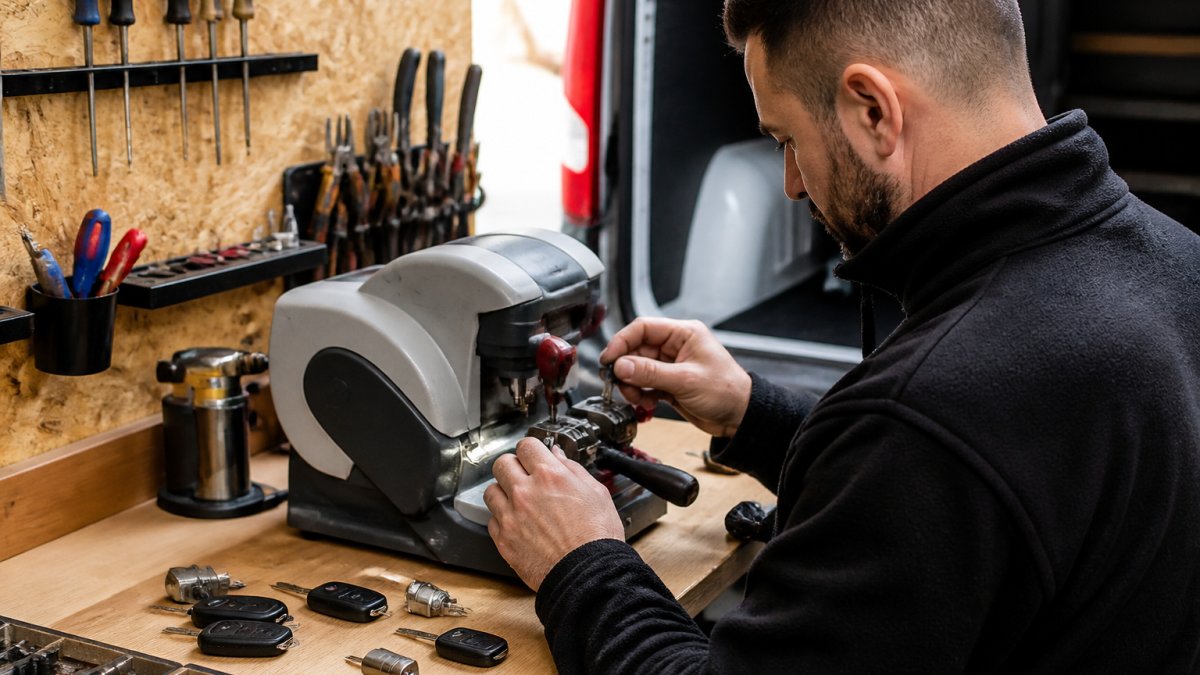
Call a mobile auto locksmith who can cut and program a key on site.
Have your proof of ownership ready. A V5C logbook or a recent insurance document speeds things up.
If the key is truly gone, a mobile locksmith can often make and program a replacement at your home or roadside, avoiding a tow to a main dealer.
Lost Car Key Replacement Cost: What Drives the Figure
There's no single lost car key replacement cost, the price depends on the vehicle, key type, and who does the work.
The main cost drivers:
Key type. A basic transponder key costs far less than a smart key or remote fob.
Programming. Keys with an immobiliser chip need coding to the car.
Vehicle make. Some brands need dealer-level software access.
Dealership quotes for newer models can run well into the hundreds of pounds. A mobile auto locksmith is often cheaper, and you don't lose the car for a day. Ask for a firm quote before anyone touches the vehicle.
Claim or Pay Out of Pocket? A Simple Decision Tree
Run through this before you file a claim. It saves money more often than not.
Situation | Best move | Why |
Replacement cost well below your excess | Pay out of pocket | A claim pays nothing and risks your no-claims discount |
No key cover on your policy | Pay out of pocket | There is nothing to claim |
Cost far above your excess, key cover in place | Claim | The insurer absorbs the bulk of the bill |
Key stolen with a real crime reference | Claim, and consider lock replacement | Security risk may justify the claim |
Only key lost, no spare, urgent need | Get a locksmith first, claim later if covered | You need the car back before paperwork clears |
When a Stolen Key Could Still Open Your Car
A stolen key is a security problem, not just a cost problem. Whoever has it may be able to open the car and drive it away, and a replacement key alone doesn't always close that door. Reprogramming stops the engine starting, but the physical lock may still open the door.
Work through these steps in order. The sequence matters because each step feeds the next.
Report it to the police and get a crime reference number. Do this as soon as you are sure the key was taken rather than mislaid. The crime reference is the document your insurer will ask for.
Tell your insurer the same day. Theft cover may depend on prompt reporting, and some policies require notification within a set number of hours or days.
Move the car somewhere secure if you can. A locked garage, a secure car park or blocking it in with another vehicle buys you time.
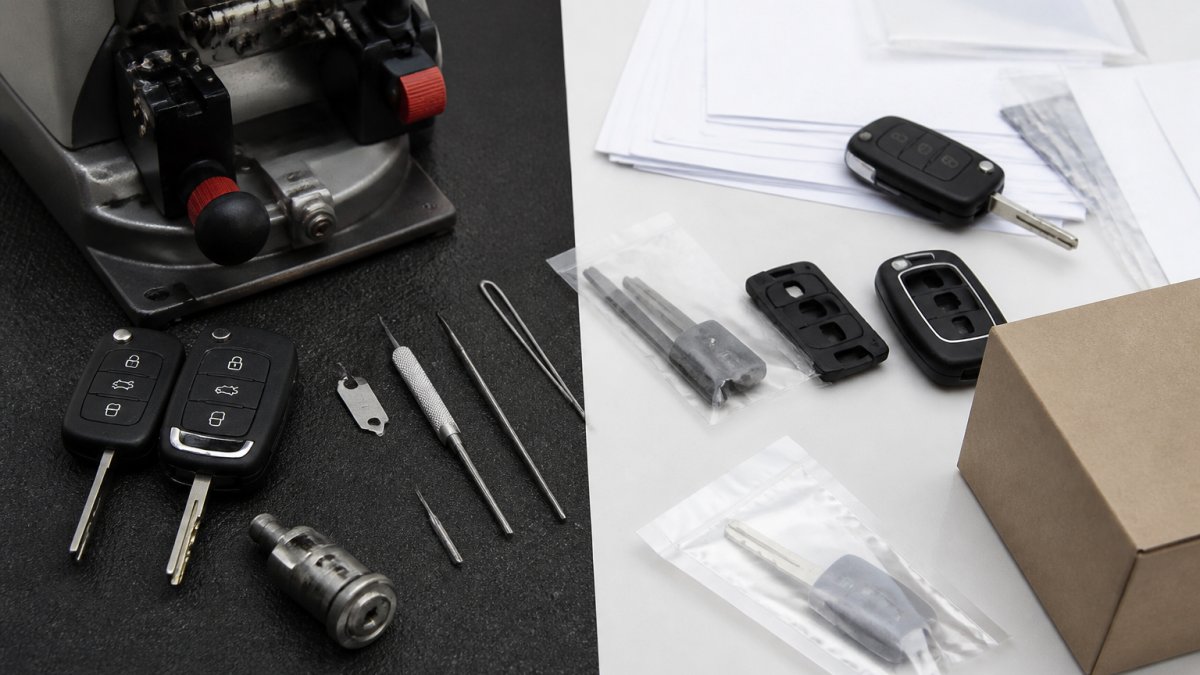
Ask about lock replacement or rekeying, not just a new key. A modern key fob can be reprogrammed so the stolen one no longer starts the car, but the physical lock may still open the door. Insurers and locksmiths often recommend replacing the locks as well.
Check your vehicle security. A steering lock, wheel clamp or tracker helps while you wait for parts or an appointment.
Why Reprogramming Alone May Not Be Enough
Modern cars use a transponder or smart key that talks to an immobiliser. Reprogramming the vehicle to forget the stolen key stops it starting the engine, but the mechanical lock barrel is a separate system.
That is why a thorough response often involves both:
Reprogramming the immobiliser so the stolen key cannot start the engine
Rekeying or replacing the lock barrels so the stolen key cannot open the doors
Ask your locksmith which parts of your key are physical and which electronic, and what each replacement step achieves. A good one will say plainly whether reprogramming alone leaves a physical risk.
What to Tell Your Insurer
When you call, have these ready:
The crime reference number
Your policy number and vehicle registration
A description of the key (smart key, transponder, remote fob)
Ask two direct questions: "Does my policy cover lock replacement as well as the key?" and "Will this claim affect my no-claims discount?" The answers decide whether you claim or pay yourself.
While You Wait: Temporary Security Measures
If a replacement key or lock change cannot happen immediately, reduce the risk:
Park in a well-lit, overlooked spot or a secure car park
Use a steering lock or wheel clamp as a visible deterrent
Remove valuables and leave nothing on display
A stolen key is stressful, but a clear sequence, police, insurer, locksmith, then locks, keeps the security risk contained and the claim on solid ground.
Frequently Asked Questions
Can I claim on insurance for a lost car key?
Sometimes, but it depends entirely on your policy. Comprehensive cover does not automatically include lost keys. Check your policy schedule and wording for a key cover section or an optional add-on. Where cover exists, you normally need to report the loss, provide proof of ownership, and pay any excess. If the key was stolen rather than simply mislaid, you will usually need a crime reference number before the insurer will proceed.
Will claiming for a lost car key affect my no-claims discount?
It can. A lost key claim is still a claim, and many insurers treat it like any other, which means your no-claims discount may be reduced at renewal. Before claiming, compare the likely payout against the excess and the potential premium rise over the next few years. If the replacement cost is close to your excess, paying yourself often works out cheaper overall.
What should I do if I lost my car key and don't have a spare?
Start by confirming the key is genuinely gone rather than misplaced at home or work. Check whether your policy includes lockout assistance, then contact a mobile auto locksmith who can cut and program a replacement on site. Have your V5C logbook and photo ID ready as proof of ownership. If the key was stolen, report it to the police and tell your insurer so the old key can be erased from the immobiliser.
Is lost car key cover included as standard or sold as an add-on?
It varies by insurer and policy wording. Some comprehensive policies bundle a modest key cover limit, while others sell it as an optional add-on or expect you to take standalone key insurance. Read the policy schedule rather than the headline advert, and check the cover limit, the excess and whether locks and reprogramming are included or only the key itself.
Losing a key is stressful, and the insurance paperwork can make it worse. The fastest way back on the road is a mobile auto locksmith who can cut and program a replacement at your home, workplace, or roadside. Salisbury Auto Keys is family-run, RAC-accredited, and fully insured, with a 12-month guarantee on all work. We serve drivers across Wiltshire, Hampshire, Dorset, and parts of Somerset. Ask us now for a quote and get moving again.
ask us now

Comments